Sudan has been ranked the world’s most severe humanitarian emergency for the third consecutive year, according to the International Rescue Committee’s (IRC) 2026 Emergency Watchlist.
The report cites collapsing global support for lifesaving aid and the continued role of international actors in fueling the conflict.
The grim ranking comes more than 1,000 days after fighting erupted between the Sudanese Armed Forces (SAF) and the Rapid Support Forces (RSF), a power struggle that has plunged the country into what aid agencies describe as the world’s largest humanitarian crisis.
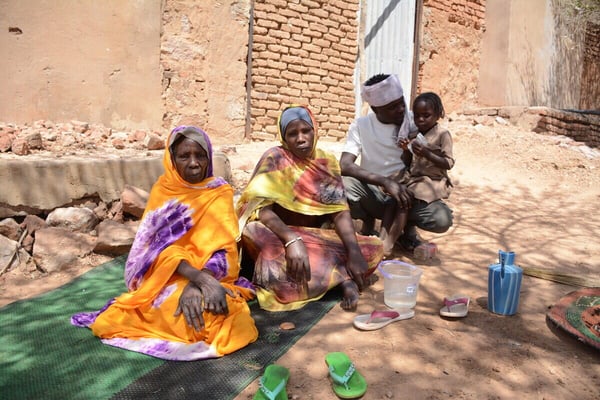
The war has devastated communities, displaced millions and pushed large parts of the population toward famine-level hunger. Health facilities have collapsed, water and sanitation systems have been destroyed, and disease outbreaks are spreading rapidly through overcrowded displacement camps.
Humanitarian needs now far exceed available resources, with the IRC warning that without a dramatic increase in funding and guaranteed humanitarian access, countless more lives will be lost.
Bob Kitchen, IRC’s Vice President of Emergencies, recently visited Darfur and described the situation as a collective global failure.
“One thousand days of war is one thousand days of failure,” Kitchen said, recounting a 50-hour journey across Darfur where he witnessed families fleeing violence while humanitarian convoys moved in the opposite direction to deliver aid.
“El Fasher, once home to more than one million people, has become a grim emblem of Sudan’s descent,” he said. Survivors who fled to Tawila reported widespread sexual violence, executions, forced recruitment and children being separated from their families during escape routes.
Kitchen said that in towns such as Tawila, Zalingei and El Geneina, people who have endured extreme violence remain determined to keep their families alive despite repeated displacement. The IRC currently supports more than half a million displaced people in these areas with health services, clean water and cash assistance.
The IRC’s 2026 Emergency Watchlist describes Sudan as a stark example of a growing “New World Disorder,” where warring parties and their regional backers continue to benefit from conflict, diplomacy remains fractured, and humanitarian funding has collapsed by 50 percent.
Repeated ceasefire attempts have failed, mediation efforts are fragmented, and vetoes at the United Nations Security Council have stalled decisive international action, leaving millions without critical assistance.
“As we approach this catastrophic milestone, the world must not look away,” Kitchen said. “Civilians have paid the highest price for a conflict they did not choose.”
The IRC has called for urgent and sustained international action, including increased humanitarian funding, guarantees of safe passage for civilians, unfettered access for aid workers and stronger diplomatic pressure on all parties to the conflict.
“The people of Sudan deserve safety, dignity and the chance to rebuild their lives,” the organisation said.